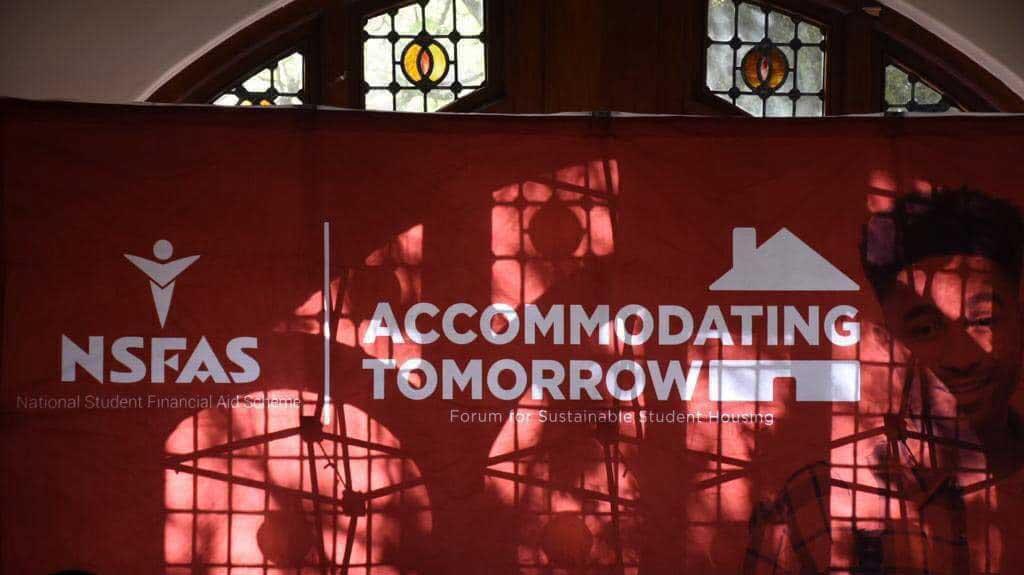
The National Student Financial Aid Scheme (NSFAS) has strengthened regulations governing private accommodation providers in South Africa. These new norms and standards for private accommodation are deemed as necessary to regulate the sector and address quality and maintenance concerns.
NSFAS provides comprehensive bursaries and student loans to deserving students enrolled in approved courses at universities and TVET colleges. Funding covers tuition and registration fees as well as several allowances for food, accommodation, and learning materials.
NSFAS implemented an accreditation process based on the Department of Higher Education and Training (DHET) Norms and Standards for Student Housing.
Gift Moleko, spokesperson for the National Association of Student Accommodation Transformation (NASAT), highlighted key challenges facing student housing providers. This includes delayed payments to landlords, difficulties in obtaining municipal certificates, and the financial strain on small-scale providers.
Some of these certificates like your rezoning and all of them, they need the municipalities' intervention, and with the reluctance of municipalities, that can make or lead up to some of the student accommodations not meeting the minimum norms and standards,
A recent meeting between NASAT and NSFAS’s acting CEO, Waseem Carim focused on resolving these issues.
Moleko welcomed NSFAS’s direct payment system, which ensures landlords receive funds directly, preventing misuse by students.
Previously, when students received their allowances directly, there were instances where they would move into private accommodation, and when the money came in, they would leave. This solution has both advantages and disadvantages, but now, small-scale accommodation providers like myself can operate because NSFAS has taken over the process.
To comply with the new standards, student housing must include designated study areas, communal spaces, laundry facilities, and a regulated ratio of essential amenities such as showers and stoves.
I'm just going to read a few of them, wash basins, one per four students, shower cabins, one per seven students, stoves, two stoves per six students; showers, one shower per four students.
Concerns over poor accommodation conditions were raised when reports surfaced that some students were living in shacks. NSFAS launched an internal audit through its Board Ad Hoc Committee on Student Accommodation to investigate these claims.
While the audit found no official records of students residing in such conditions, it revealed that some students had changed accommodation without updating their lease agreements and college records.
NSFAS introduced a Student Accommodation Pilot Project to ensure that only accredited, quality housing is funded.
The accreditation process involves multiple steps, including registration by providers, physical inspections, grading assessments, and approval before students can apply for housing through the NSFAS portal.
Moleko emphasised the need for better cooperation with municipalities to streamline the certification process for accommodation providers.
One of the responses by the acting CEO of NSFAS was that they will look into ensuring that they go down to municipalities and engage them in making other processes easier to allow us, as student accommodation providers, to receive all the necessary documentation on time,
Despite these measures, the demand for student housing still far exceeds supply.